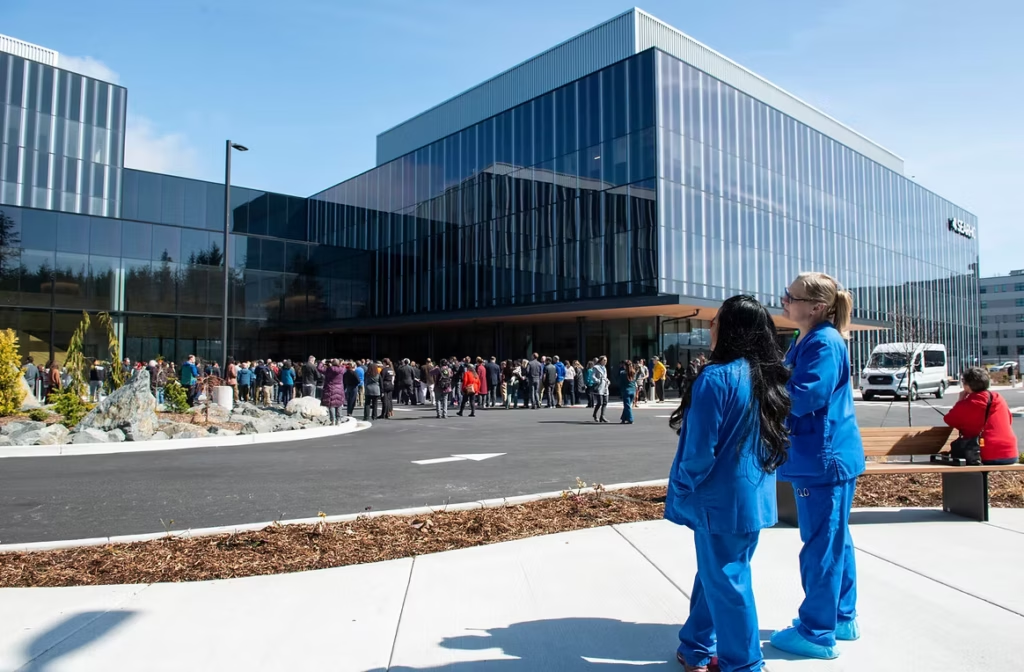
SEARHC cut the ceremonial ribbon on its new $300 million Mt. Edgecumbe Medical Center in Sitka on April 23.
The event for the five-story, 234,528-square-foot facility featured a traditional blessing, a welcome and addresses by leaders of SEARHC and the Sitka community.
Charles Clement, SEARHC president and CEO of 14 years, said in his remarks, “This has been a real challenging project to pull together, beginning to end.”
“It has come to represent much more than a building for me,” said Clement, of Metlakatla. “It represents our commitment to our patients, our commitment to our communities, our commitment to our employees.”
SEARHC designed and constructed the medical services building. In 2020 SEARHC was selected by the U.S. Indian Health Service for the Indian Health Service Joint Venture Construction Program, which provides long-term funding for staffing and operation of the new hospital.
The hospital is about twice the size of the building it replaces but will have the same number of patient beds. That’s due to funding and license requirements, Clement told the Sitka Sentinel.
“To qualify as a critical-access hospital, it has to be 25 beds or less,” he said.
Services at the new building will start May 4, with departments making the transfer in May and June.
The new hospital comes 10 years after the city of Sitka entered talks with SEARHC about consolidating the services provided by SEARHC and city-owned Sitka Community Hospital. After long negotiations and voter approval in a city election, the Sitka Community Hospital’s buildings, grounds and business were sold to SEARHC in 2019, and SEARHC pledged to continue, and expand, the health and medical services available to the public.
Health care has become the largest sector of the Sitka economy, with total earnings at $67.3 million (782 jobs) in 2024, according to a Rain Coast Data presentation last year.
Growth in health care continues in Sitka. At the ribbon-cutting, the deputy director of the Indian Health Service, Benjamin Smith, announced that IHS will work with SEARHC in a joint venture to develop a new long-term care facility on the Sitka campus.
Clement told the Sentinel the project would “replace the long-term care facility over (at the Sitka Community Hospital building) with a newer, larger facility here on SEARHC campus.” Initial plans are for the facility to have 35 beds in the long-term care unit, up from the 19 beds SEARHC currently offers in a building at the former Sitka Community Hospital site.
In the interview, Clement also addressed SEARHC plans in other Southeast communities.
The tribal nonprofit plans to build “a small critical-access hospital” in Haines, he said, “based on the model that we developed in Wrangell.”
SEARHC opened its $30 million Wrangell hospital in 2021. It’s about one-fifth the size of the new Mt. Edgecumbe facility.
“We’re building a new medical office building (in Wrangell) to consolidate onto a single campus,” Clement said. “We have multiple facilities all over town, and we have enough land there to bring it all into a medical campus.”
The health care provider also plans to build eight rental units in Wrangell to house its traveler staff.
In Klawock, “we’re doing a lot of site work down there to get ready to do another clinic replacement, with a goal eventually developing, if we can make it work, long-term care and a critical-access hospital there,” Clement said.
Sitka will remain a hub for medical services in Southeast, and continues to be the only SEARHC location offering labor and delivery services, Chief Operating Officer Martin Benning told the Daily Sitka Sentinel.
“Everything that’s over at the current hospital is moving in here by the end of June,” Benning said.
As for the future of the old SEARHC hospital building and the Sitka Community Hospital building, Benning said, “We haven’t nailed anything down definitively, we’ve just been focused, ‘Let’s get this done,’ and then we’ll figure out, ‘What do we do?’”
Back at the old SEARHC hospital building on April 23, long-time employees and patients gathered around cafeteria lunch tables to reflect on the history of the building that began as a naval hospital in World War II.