The state has been promised a more-than-quarter-billion dollar windfall, and some of it could end up in the Chilkat Valley.
The $272 million materialized in Juneau just before New Year’s for the Rural Health Transformation Program — part of the Trump Administration’s tax and spending bill, often referred to as the One Big Beautiful Bill, passed in July.
As a whole, it’s a complex set of changes to state healthcare funding. The federal spending bill included cutbacks to Medicaid that could total between $1.5 to $2.5 billion in Alaska over the next decade, according to the nonprofit Kaiser Family Foundation.
But state officials hope the rural health funding, a last-minute addition to the bill, could blunt that Medicaid loss, state health commissioner Heidi Hedberg said in an interview with Alaska Public Media this summer.
As the plan stands, Alaska is slated to receive similarly sized rural health awards in each of the next four years. But it’s not a one-for-one trade.
The rural health funds come from the federal government’s Centers for Medicare & Medicaid Services. But rather than go toward health insurance, the money will go to the state to disburse in grants, which specifically supplant Medicaid payments, according to federal guidelines. As for where the grants will end up, all that’s currently known is a set of wide-ranging eligible categories.
The state’s six listed priorities for the funding include phrases like “spark technology and innovation,” and “healthy communities.”
State documents list suggested uses within these categories ranging from telehealth platforms to medical-delivery drones, to postpartum and chronic-disease care.
Like the expansive list of eligible uses, a broad range of public and private entities are eligible to apply, including municipal governments, tribal governments, healthcare providers, tech companies, non-profits and trade organizations.
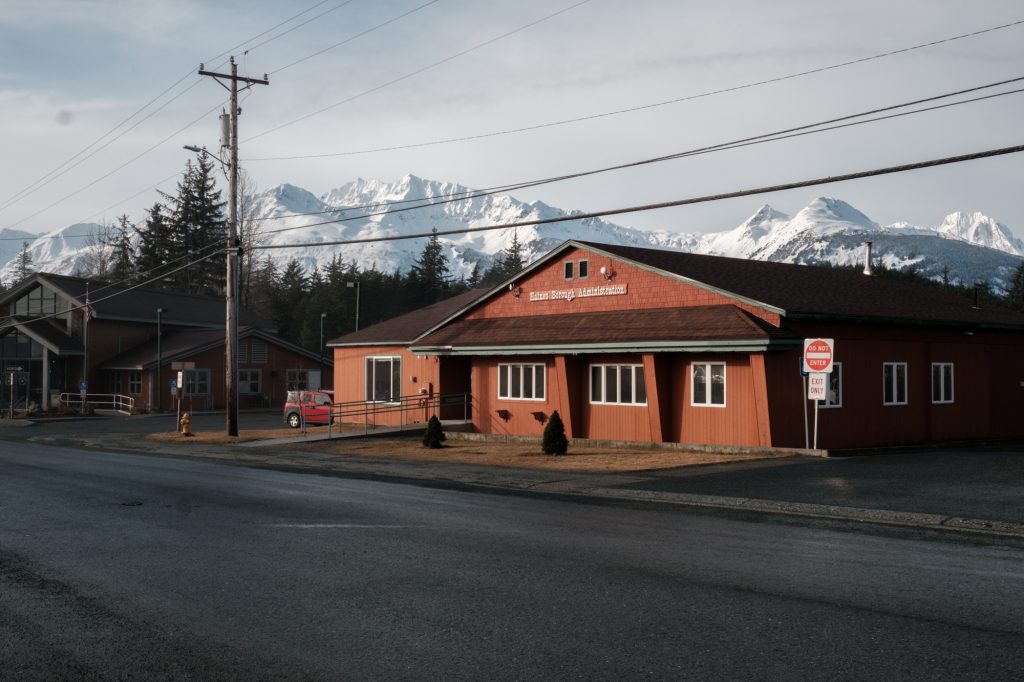
In the Chilkat Valley, that means traditional healthcare providers like SEARHC will be vying with non-profits like Haines Huts and Trails and the borough government for a chunk of the same funding pot.
A tight turnaround
While local applicants say the program is a significant opportunity, they’ve also been challenged by uncertainty and a tight timeline.
To get a foot in the door, applicants had to submit letters of interest detailing potential projects by March 11. That was just weeks after information about the program was released.
The total sum for the state was announced by the federal government on Dec. 29, just before the new year. Then, roughly a month later, borough manager Alekka Fullerton said she received notice of the program from Sen. Lisa Murkowski’s office, which she immediately forwarded to all non-profits in the Chilkat Valley.
Meanwhile, the state’s Department of Health rolled out information to the general public at roughly the same time, including a Feb. 10 webinar introducing the general application process and eligibility guidelines.
That left only a month to produce letters of interest.
Many in the borough who hope to apply say that compressed timeline is out of the ordinary.
Borough grants administrator Helen Alten and Four Winds Resource Center board member Erika Merklin both said a more familiar timeline is a three- or four-month grant application window.
Amid the rush for funding, the borough government and local organizations are still trying to get a handle on the application process. At a public meeting last Wednesday, borough officials and non-profit leaders hoped to discuss their applications to avoid overlap. But much of the meeting consisted of organization leaders trading basic application information back and forth, gathered from various webinars and conversations about the program rollout — with frequent refrains of “I heard,” “I read,” and “what’s your understanding?”
It’s not just borough leaders feeling the rush, and it’s not just this week’s deadline that’s the issue. Department of Health communications director Shirley Sakaye this week described the situation as “evolving quickly,” even though the state’s program website says grants may be awarded starting this spring.
Meanwhile, Alten said this week the state’s grant matrix — which will describe criteria for the stage of the grant application after letters of intent — continues to change.
Federal timelines down the road are speeding up the process in other ways. According to federal guidelines, the state has to award the money by October this year. Organizations that receive money then have to spend it all by the following October. According to federal guidelines, whatever funds are unspent by that deadline could be taken away. Failure to spend the full amount could also decrease funding in future years of the program.
Mayor Tom Morphet said Murkowski, at last month’s Southeast Conference, told municipal leaders to “ask for everything and the kitchen sink.” Provided with a high volume of applications, the state can ensure all the funding gets awarded, Morphet said.
But for all the guidance to go big, the tight deadlines have been a handbrake for some applicants.
“I was hesitant to do too much in the first year because we want to be able to get it done,” said Nate Arrants from Huts and Trails at the borough meeting. “At this point, we have a week to get these cooperating partners together.” Amid the rush, certain types of organizations may see existing advantages compounded, Merklin said.
“You know who’s really ready to get this money is SEARHC. People in Anchorage. (Organizations) with grantwriters. With us in rural areas who really need it, it’s a bigger push with less capacity.”
Participants at the borough’s meeting last week, including Alten, said they had heard from Department of Health officials that the state would be prioritizing fleshed-out, “shovel-ready” projects. That could further the advantage for entities with more significant capacity.
Some of those large organizations have a presence in Haines, like SEARHC, or Southeast Alaska Independent Living. But those organizations could be putting in for system-wide grants, with no guarantee the Chilkat Valley will see direct returns. Morphet last week said he had heard from SEARHC officials that they would only be submitting on a system-wide basis.
SEARHC spokesperson Matt Carle did not respond to a question this week about his organization’s applications.
Possibilities for the Chilkat Valley
Some organizations in the Chilkat Valley have ambitious plans.
The Haines Volunteer Fire Department will apply for funding for a mobile paramedicine program to deliver care to people’s homes. With a grant to fund a new vehicle, equipment and training, assistant chief Tim Holm said the department can do more preventative care.
“Wound care, substance abuse care, we could bring antibiotics to people’s houses in Klukwan or Mosquito Lake or Lutak — people who don’t want to or can’t come in to the clinic,” Holm said.
According to department EMS director Julie Anderson, working models for the program already exist in Juneau, Ketchikan and the Anchorage area.
If initial startup costs are grant-funded, the program could then be funded by the department’s new zero-balance ambulance billing system, Holm said.
The borough will be submitting letters of interest for other programs. The top priority, Fullerton said last week, is funding for a padded jail cell in the public safety building and funding to train police department and fire department employees in responding to mental health crises.
Borough grants administrator Helen Alten said the borough will also be applying for two more initiatives. One would replace the HVAC system and increase pool programming, including a partnership with SEARHC for pool-based health and rehab activities. The other grant application would fund more meals at the senior center, bumping the senior lunch from three times a week to daily.