

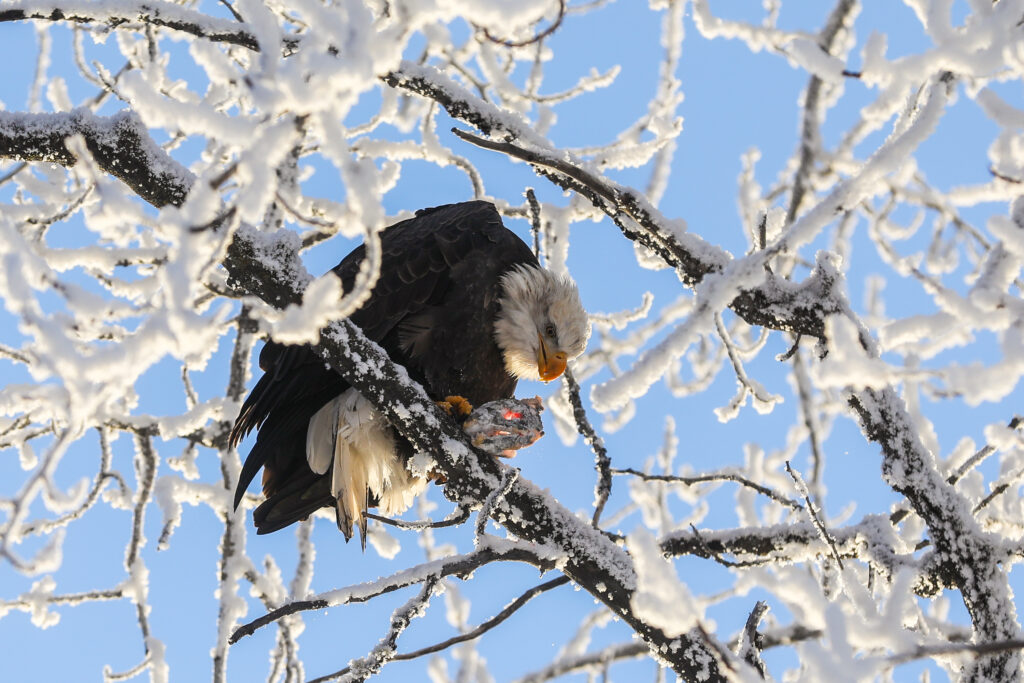
The National Weather Service warns of extreme cold through noon Christmas day.
The weather service predicts a high of 5 degrees Fahrenheit Monday with windchill as low as 20 degrees below zero dipping down to a low of about minus 4 during the evening. On Tuesday the high is again projected to reach about 5 degrees with a low about 1 below zero.
The weather service released a warning noon Monday that said that frostbite and hypothermia are likely to occur when anyone is exposed to the cold temperatures. The coldest temperatures are expected further inland, away from the water.

These temperatures, which mirror a cold snap throughout the upper panhandle and Southeast Alaska, are somewhere between 15 to nearly 30 degrees below normal this time of year, according to the weather service. In Haines, that departure from the norm is an average of 12 degrees colder than usual for the month of December, while the upper valley is 9.5 degrees cooler than average for the month through Dec. 22.
Along with the cold, the weather service warned of the possibility of ruptured water pipes but it isn’t clear yet how many Chilkat Valley homes may face that possibility.
Water and sewer plant supervisor Dennis Durr said borough workers won’t know the scale of any potential issues until the cold snap eases.
“We don’t really see that impact and flow increase until after things are warming,” he said.
Fortunately for borough lines, Durr said the snow is helping to keep the ground warm.
“It hasn’t frozen, maybe more than a foot, if that,” he said. “So we’re not really impacted on the water main side.”
But it may be awhile before the Chilkat Valley sees sustained warmer temperatures.
Local meteorologist Jim Green said it’s difficult to predict with any amount of confidence the next four or five days, given that the valley was having a mild winter up through early December.
Still, there are indicators that residents may be in for a long cold winter.
“The computer models have been pretty good about predicting this sustained cold and they keep saying it’s going to be sustained cold and they keep saying there’s going to be more of it,” he said. “The rest of this winter overall is probably going to be continued [lower than average] temperatures.”