
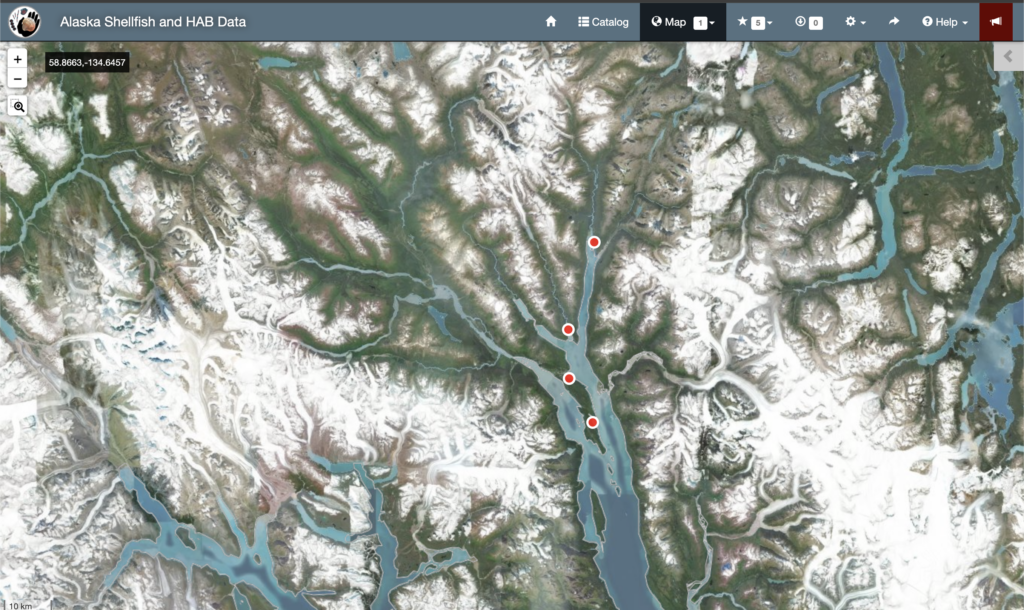
Paralytic shellfish toxins have been found in shellfish collected in water around Haines.
The toxins, which originate from some species of phytoplankton, can pass up the food chain when phytoplankton levels are high, accumulating in shellfish and then affecting humans and animals that eat those shellfish. Consuming affected shellfish can be fatal to humans. The toxin is not destroyed by cooking or freezing.
As of last week, tissue samples from blue mussels around the Chilkat Valley — Viking Cove, Portage Cove and Taiyasanka Harbor — all tested above safe limits for the toxin. Toxins have also been found in shellfish collected from Nahku Beach in Skagway.
That means all mollusks are currently unsafe to eat, said Chilkoot Indian Association environmental specialist Liam Cassidy, who collects the samples in Haines and then sends them to a Sitka lab where they’re tested.
The mollusk category refers to shellfish with a hinged shell, like clams, mussels, and geoducks. Finfish, shrimp and crab meat is not known to contain the toxin, Cassidy said, but crab guts, sometimes known as crab butter, may contain high levels of the toxin and should be cleaned out before eating.
Harvesters can send samples to Cassidy to be tested. He can be reached at [email protected] or at 907-766-2323. The collector does not have to reveal the location where they were harvested.
Fresh or frozen samples can also be sent directly to Southeast Alaska Tribal Ocean Research’s lab in Sitka. The research lab, also known as SEATOR, is a tribal consortium that does environmental data collection.
Results from testing shellfish all over Southeast Alaska are published on SEATOR’s website, to help the public know where toxins are present and avoid eating unsafe shellfish. Currently, the lab has advisories for shellfish from Ketchikan and Skagway in addition to Haines.

