

Crouching on the ground, surrounded by various plants, a crew of six from Haines, Skagway and Juneau worked to pull the invasive non-native plant known as white sweetclover, or Melilotus albus. Each member used their gloved hands along with garden shovels or even screwdrivers in some cases.
The team is currently pulling sweetclover by the airport, a location they started removing plants from in 2024. Locations have to be revisited annually or biannually to ensure that the small, new offshoots are caught and weeded out. In order to prevent the plant from further producing, the crew is hoping to remove as many plants as possible before flowering begins and the plant goes to seed.
The plant is one of several in the Chilkat Valley that the Takshanuk Watershed Council is focused on eradicating. Others on the list include: creeping thistle, jewelweed, reed canary grass and European mountain ash.

The plant in the crosshairs this week, white sweetclover, is a tall, branching plant that has small, white flowers when blooming. It has been found along the Haines Highway since 2013. However, in recent years, it has begun to spread.
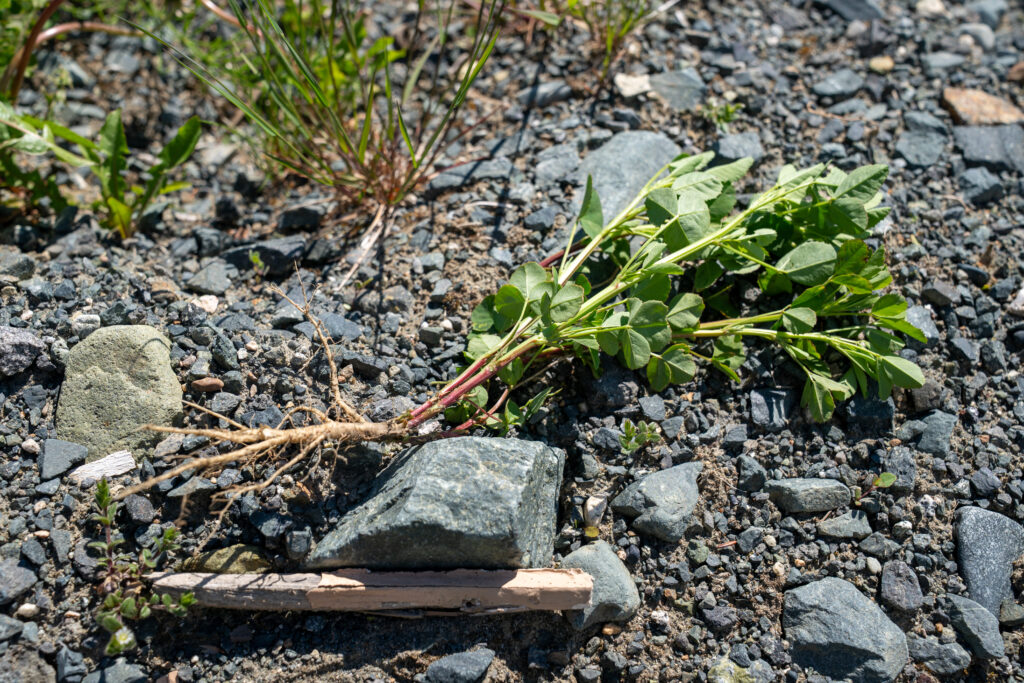
Stacie Evans, science director at the watershed council, said staff are focusing their efforts on sweetclover to keep it from getting deeply established in the Chilkat Valley.
The plant causes damage by outcompeting other plants. It also contains a chemical compound which is toxic to animals, according to the United States Department of Agriculture. Evans said it can be damaging to riparian habitat on the edges of rivers, streams or lakes. That’s because sweetclover does not provide a lot of shade or bank stabilization, both of which are important for fish habitat.
“The Chilkat Valley is known for having the most vascular plant species in Alaska, incredible biodiversity here but you see places where already the white sweetclover has taken over,” Evans said.
Evans said the plant has mainly been found along the highway because the seeds like disturbed habitats. While sweetclover is a relatively new infestation in Haines, it has been found in places like the Stikine River, Kake, Prince of Wales Island, and Skagway but has been eradicated in Juneau, according to Emily Reed, the Regional Invasive Plant Coordinator at the Southeast Alaska Watershed Coalition.
Sweetclover hasn’t spread too far away from the highway, Evans said. There have been small patches of it found along Beach Road and across the Porcupine Bridge.
“Now, we’re concerned that the seeds might get into the river, and then bring the plants to other vulnerable areas that are harder to get to,” Evans said.
Reed came to Haines from Juneau to help with efforts to map and eradicate the plant. She said sweetclover is an “annual to biennial” when it comes to producing seeds.
“We’re kind of in a funny zone where sometimes it’s an annual, so it can do it [seed] in one year and then sometimes it takes two years,” Reed said. The seeds can survive up to 80 years. White sweetclover can produce 14,000 to 350,000 seeds per plant, according to the United States Department of Agriculture.
According to Reuben Cash, environmental coordinator with the Skagway Tribal Council, sweetclover also puts out chemicals into the ground to prevent other plants from establishing.
“It’s just got a lot of really aggressive techniques for being where it is and because it’s not from here, there are no natural checks and balances to kind of keep it in check,” Cash said.
According to Reed, sweetclover has spread significantly along the Haines Highway since it was first inventoried when the Constantine Mine did an invasive plant survey and then again through the Haines Highway project’s plant survey.
The Stikine River has the oldest known infestation of white sweetclover along a riverine system, according to Reed. She explained that other teams on rivers in Southcentral Alaska, including the Copper River watershed, have been tackling sweetclover for over 15 years.
“You look at the pictures from Copper River, and it’s really concerning,” Reed said. “It’s not at that point here, which means it’s the time to take action, because there’s a chance right now.”
Sweetclover is competitive and tends to push native plants out. So, along with removing the plant, Reed and Evans are gathering data to better understand its density and how best to control it.
In 2024, Evans said a lot of people around Haines noticed the rapid spread of sweetclover, which prompted the watershed council to organize a community weed pull. In the two years since, the watershed council got grant funding to pay a small crew to pull invasive plants. Evans hopes to supplement this with the help of local volunteers.
On Wednesday, the Takshanuk Watershed Council hosted an iNaturalist workshop to educate people about how to identify plants. This app helps Evans and Reed map out where the invasive species are.
“We have a pretty good sense of where the jewelweed is at this point, however we haven’t looked everywhere,” Evans said.
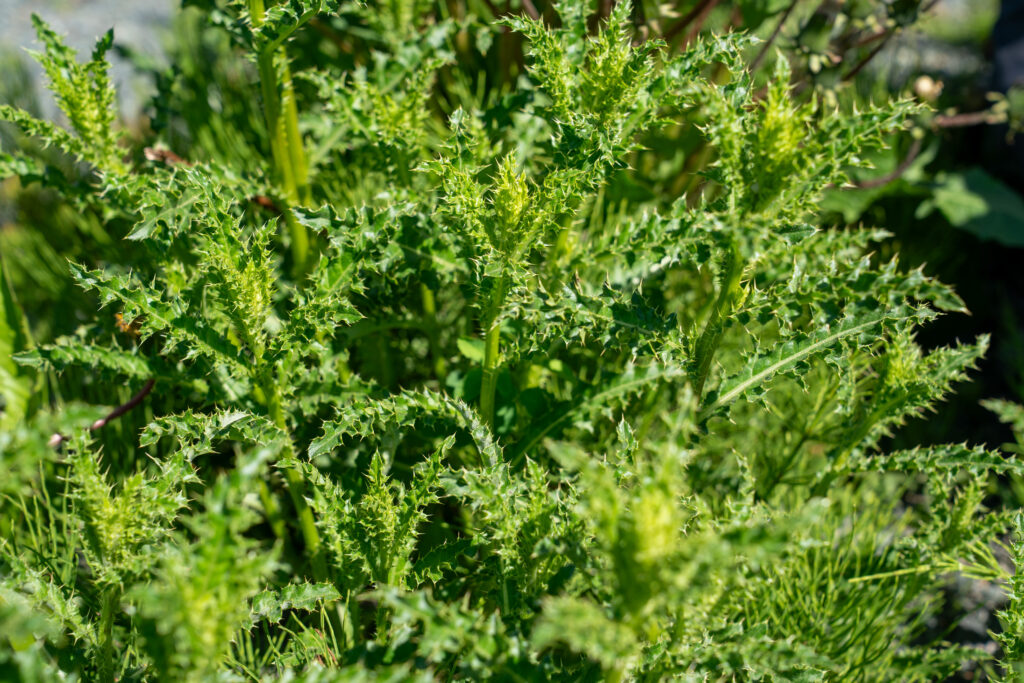
Sweetclover and jewelweed are safe to pull before they go to seed. Plants like creeping thistle and reed canary grass are harder to weed because if the roots don’t come out with the plant, it can lead to more robust growth according to Evans.
Cash came over to Haines with two other members to help pull sweetclover. Cash said that they have been mapping sweetclover in Skagway since 2019. By mapping and pulling sweetclover, Cash says that what once had been “really bad infestation spots” now have almost no sweetclover.
This is the first time that people from Skagway have come to Haines to help manage sweetclover. Later in the summer, the Haines crew will go help remove sweetclover in Skagway.
The crew is working full-time until mid-July to eradicate the plant before it starts to flower and seed. But this job is not solely focused on pulling plants, they are also mapping different invasive plants like jewelweed and creeping thistle. Because each of the plants flower at different times of the summer, the crew is able to focus on pulling sweetclover, which flower earlier than jewelweed. Reed estimates that it will take around 10 years of management before the plant is eradicated, however, the “idea is that the effort required tapers off” over that time.
“Ideally the first two years are a ton of work, and then after that it’s much less,” Evans said.
A community weed pull was organized for 10 a.m. on Thursday, June 11, along the Haines Highway. Meet at the Takshanuk Watershed Council office to join the crew tackling white sweetclover along the highway.