

Hey guys!
It’s me, Chisel Triezenberg, in my second year as the Chilkat Valley News’ summer editorial intern. One of the things I’m doing this year is learning how to create a newsletter, so this is that.
Readers of the paper will likely recognize the This Week in History section, and this newsletter is going to be similar, but far more in-depth. If you’ve never read a This Week in History before, then congratulations, it’s even more exciting now!
Every Wednesday, I’ll dig through the newspaper archives (very distinct smell) to find some old stories from a set number of decades ago, because everyone likes to hear that things in the Chilkat Valley are the same as they always have been (generally speaking, of course).
This week, I’ve decided to put in at least one article about the fair. I always find stories about old technology funny, so I thought I would include one of those as well. The story from 30 years ago had an eye-catching title: “Piedad water may be radioactive,” which is certainly an interesting topic. I know a lot of fishermen, so I figured I would include something for them here. Of course, it wouldn’t be Haines without a ridiculous conflict that somehow manages to have people in it act even more ridiculously.
10 Years Ago (August 4, 2016)
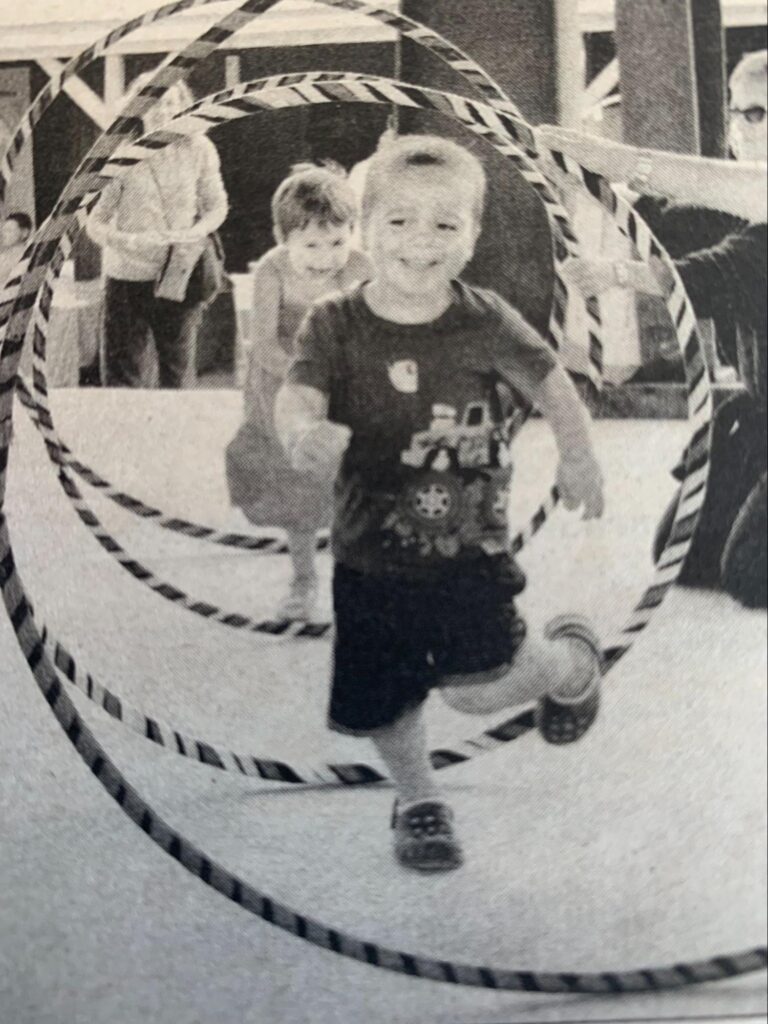
The 48th annual Southeast Alaska State Fair saw an increase in attendance this year and ran pretty smoothly, according to executive director Jessica Edwards.
An increase in Haines-Skagway fast ferry trips that were fully booked brought crowds to town and contributed to an increase in gate ticket sales, as compared to last year. Ride ticket sales remained high despite breakdowns with two rides.
The carousel broke down Saturday afternoon and was out of commission for the remainder of the fair weekend as a result of a lost bearing. The Ferris wheel also overheated Friday but was fixed Saturday with a temporary radiator to cool down the machine.
Efforts by Haines Friends of Recycling volunteers reduced the amount of waste accumulated at the fair by more than half, compared to last year. Bigfoot Auto Service has waived the fair’s waste disposal costs in the past, but Edwards didn’t know if such arrangements would be available next year after Bigfoot’s closure. The fair board encouraged food vendors to purchase compostable materials this year and fairgoers did well to separate trash from compostable and recyclable items.
Edwards said people were satisfied overall with entertainment.
The full music line-up at the Klondike, the Haines Hustle run and workshops on the park stage all saw a good turnout and were well-liked, she said. Edwards believes beer garden sales and parade attendance were up from last year. The new beach wrestling tournament was a success that the fair board would like to continue next year, as well as see more women participate.
“A lot of people tell us this is their favorite fair ever,” Edwards said.
20 Years Ago (July 27, 2006)
Tired of laying out money for expensive computer software? There’s an alternative – free, open-source software – that will be the focus of a library presentation next week.
Members of the library’s Dragonfly project will introduce community members to the opportunities provided by open-source software in an overview presentation set for 7 p.m. on Monday.
“Open source software programs provide much of the functionality and ease of use offered by the Microsoft Office program; the difference is that they are free,” said Dragonfly project coordinator Linda Moyer.
The open-source software movement was spawned decades ago by computer programmers and hackers who believed software should be free to use, modify, and distribute, Moyer said.
30 Years Ago (July 25, 2006)
Anybody want a chum salmon? That’s what local gillnetters have been asking as the packers’ price for chum continues to dip. This week, the lowly dogs were fetching only 8 or 12 cents per pound, an average of about a dollar for a 10-pound salmon.
Even after imposing rock-bottom purchase prices, processors are limiting their purchases of chums.
Desperate fishermen unable to sell extra chum have resorted to giving salmon away at the docks to keep themselves inside a law that prohibits destroying or throwing away fish. Others are using them as halibut bait. Rumors of chum dumping on the fishing grounds, in violation of the law, are rampant.
At this point an entrepreneur might say, find a way to sell chum and the world will beat a path to your door. Some Haines residents are trying.
Gillnet skipper Mike Saunders has created a local “salmonburger” using chums and just enough sockeye to lend some color.
Saunders is selling 70 pounds of his secret recipe burger to two local restaurants, where it’s receiving generally favourable reviews.
40 Years Ago (July 31, 1986)
The Piedad Road water system, which has previously shown traces of radon in it, showed no levels of the radioactive element in its latest test.
Low levels of the radioactive gas were found in the area’s water supply this winter by the state Department of Environmental Conservation. After two samplings showed radon in the system, the DEC suggested those residents be put on the city’s water supply at Lily Lake – a suggestion the residents did not like – and quarterly tests were ordered.
The third quarterly sampling was taken last week. It shows no gross alpha radiation in the lake or in the Piedad Road supply.
City Mayor April Lapham was pleased with the latest results, noting the situation will be reevaluated after the fourth sampling is analyzed.
50 Years Ago (August 3, 1968)
Problems on the Lutak Road which caused traffic to be halted and a highway department official to order the block to be lifted are still unresolved, although traffic is now moving normally once more.
According to highway department chief Tom Ward, the new road past the Schnabel mill was made impassable when Al Schafer (who owns the property which the new road crosses) cut a ditch across the road Wednesday night. The old road, which passes next to the mill, was declared blocked by mill owner John Schnabel Thursday morning.
District Engineer Willis L. Walker in Juneau then ordered Schnabel to see that a steady flow of traffic was maintained on the state highway, and the block was removed.
The road problem has developed from relocation of the old state road which was moved by the lumber company at the time the mill was built two years ago.
In order to improve the safety of the present road, Ward said, the lumber company agreed to build a road some 12 feet higher on the hillside completely bypassing the mill area which would be deeded to the state, in return for which the state would then deed the old road to property owners located on it.
Schnabel and Schafer have not been able to agree upon right-of-way for the new road, part of which would have to cross some of Schafer’s property. The road was built upon Schafer’s land, however, Ward said. Schafer apparently has considered the construction a trespass, made the road impassable, and has posted signs on his property.
Thanks for reading, and subscribing! If you’ve got a story tip, correction or other feedback let us know here.
Built with Newsletter Glue
Unsubscribe here.