

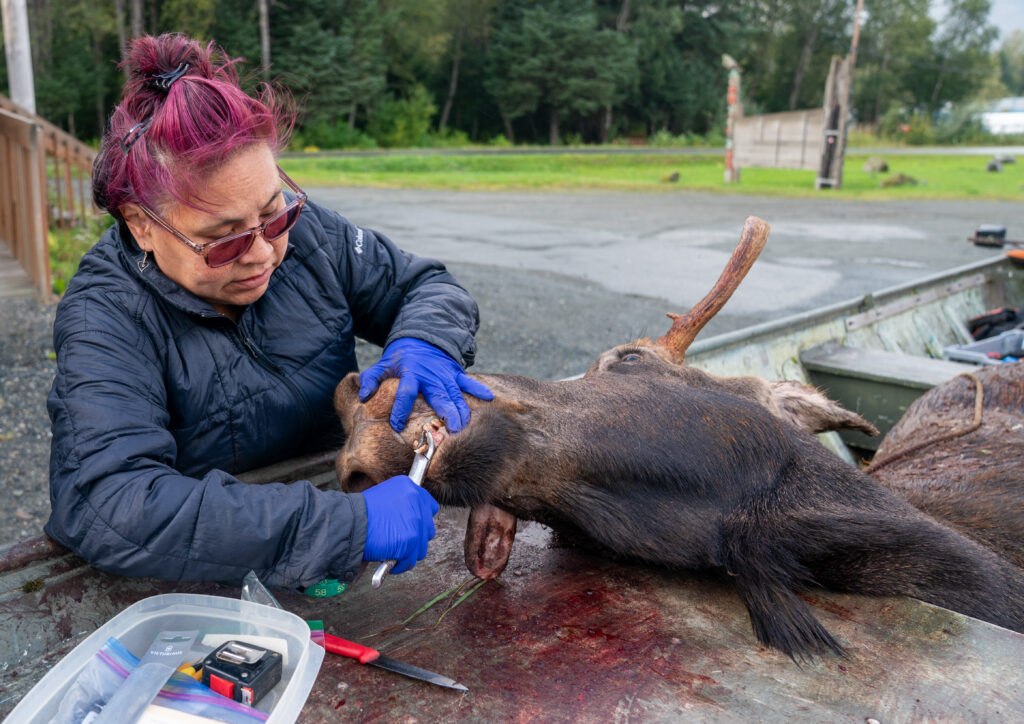
Billy O’Brien was the first person to report a successful harvest in this year’s Chilkat Valley moose hunt. O’Brien brought his moose to the Alaska Department of Fish and Game office Wednesday morning after shooting it at sunrise that same day. Fish and Game area management biologist Hannah Manninen and program tech Maria Knutson pried some teeth out of the moose. They will use these to determine the age of each moose harvested.
O’Brien and his hunting party spread out over a 2.5-mile patch, all sitting around a big swamp. With their binoculars in hand, they were looking for a moose to get close enough to verify its legality.
“You have to really make sure you can get a really, really good look at one before you shoot it,” O’Brien said.

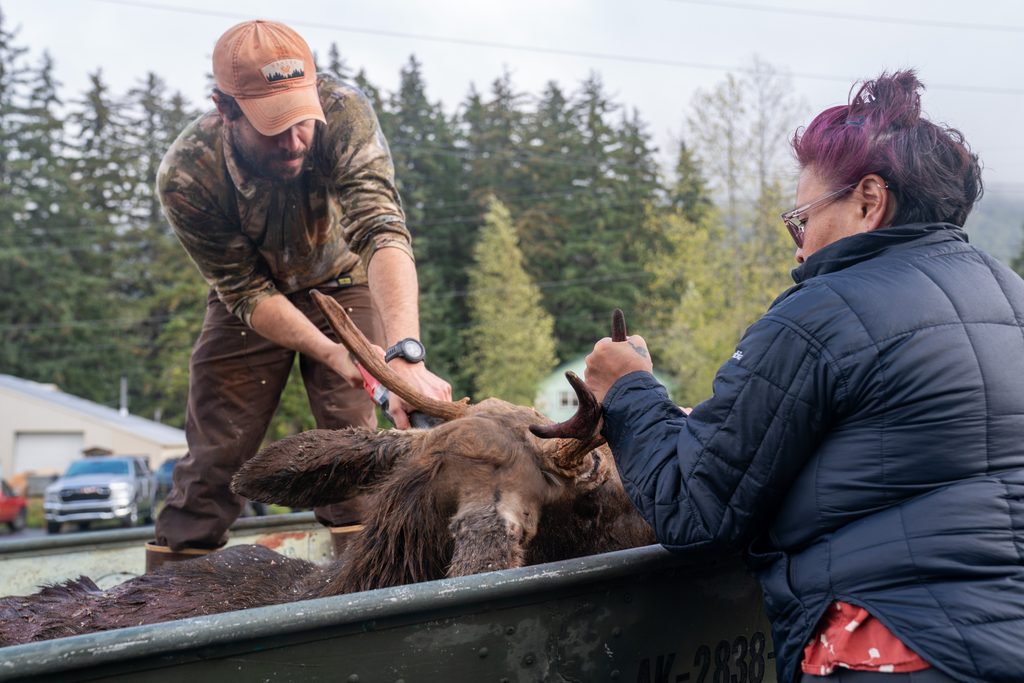
Before heading back out to help his hunting party harvest another moose, O’Brien hung the moose up in a freezer. It will stay in the freezer for roughly five days before he and others start to process it. O’Brien estimated that meat from this moose will end up in the freezer of five or six different houses. As the wind kicked up on Wednesday morning, O’Brien said that it could potentially be harder to hunt.
“If it’s too windy, they all bed down. They can’t hear a bear coming so they stay safe and protected,” O’Brien said.
The season is open from Sept. 15 to Oct. 7, unless it closes early because the quota of 25 moose is met before the end date. Moose need to have three brow tines, a spike or forked antler configuration, or an antler spread at least 50 inches to be legally harvested.
Last year’s season went up until the end date, with 24 moose harvested. Of these moose, nine of them had three brow tines. Five moose had 50+ inch or greater antler spreads. Eight had a spike or forked antler configuration. Two moose harvested didn’t meet the legal requirements and were confiscated.
After harvesting a moose, hunters have three days to report their kill and bring it in to be sampled. Manninen said hunters can stop by the Fish and Game office in Haines and ask Manninen questions.