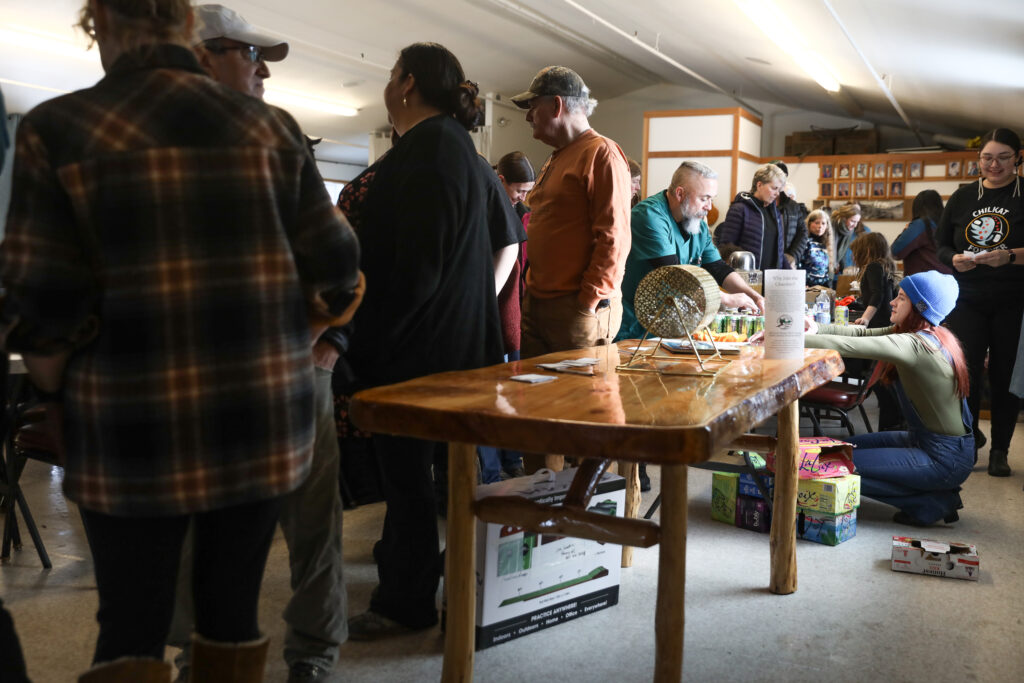
Just a few minutes after the doors of the Alaska Native Brotherhood/Sisterhood Hall in Haines opened, more than 80 people were in line for food.
Many had walked in with their own dishes to share in the final community potluck meal of the season, organized by the Haines Chamber of Commerce and local chef Travis Kukull.
By the time the night was over, more than 100 people came through – which is on track for the other two community potlucks. Kukull said people have contributed between 30 and 40 dishes each night as well.
Monday evening’s meal was co-sponsored by the Chilkat Forever initiative and the American Bald Eagle Foundation. Chilkat Indian Village (CIV) tribal councilwoman Shawna Hotch said they put out a call to Klukwan residents to share anything that showcased and celebrated their way of life, so potluck-goers wound their way by tables full of raffle items, everything from laser printed formline earrings and beaded abalone, to smoked and fresh-packed salmon, hand-tied flies, mugs from the Chilkat Indian Village and a guided voucher to the Jilkaat Kwaan Heritage Center.
She said she saw a great turnout, and more people signing up to support Chilkat Forever, which is a group led by the CIV tribal council working to protect the Chilkat River, including fighting against the development of the Palmer mine project.
“We’re open to sharing our way of life and knowledge with people who are willing to learn,” Hotch said.
While the potlucks are over for the season, Kukull said he submitted a letter of interest to the state’s Rural Health Transformation Program seeking $90,000-$100,000 to host them once a week for six months over the next winter.
Kukull said the free event is healthy for the Chilkat Valley.
“We’re not necessarily forcing people to eat healthy during this thing, though there are healthy options. I think it’s more the wintertime gathering space, getting together, that interaction that you have with your community members that you otherwise wouldn’t have on a Monday or maybe not even for a couple of months,” he said. “It means a lot to people.”
And, he said, at a time when economic pressures are increasing, he appreciates being able to give people a free option.
“Everyone has a right to affordable, nutritious foods. In rural parts of Alaska this is becoming increasingly untenable. If you don’t practice subsistence or farm, and you’re on a tight budget, then there is little assistance available to help feed your family. The potlucks are basic community stewardship, which addresses a real problem and invites everyone to participate,” he said.


