
In a year of decreased attendance for big-ticket tourism events like Beerfest and the Kluane Chilkat International Bike Relay, there was concern that last weekend’s Alaska Bald Eagle Festival would be more of the same.
Festival organizers at the American Bald Eagle Foundation and borough tourism department saw slow ticket sales in the lead-up to the festival’s main events, like a Saturday night dinner.
As the festival kicked off, eagle foundation executive director Kathy Benner said her first impression — later proven wrong — was that there were fewer tourists than expected in the foundation’s downtown raptor center. “That kind of worried me that first day,” Benner said. “I was thinking, oh boy, there’s hardly anyone in town.”
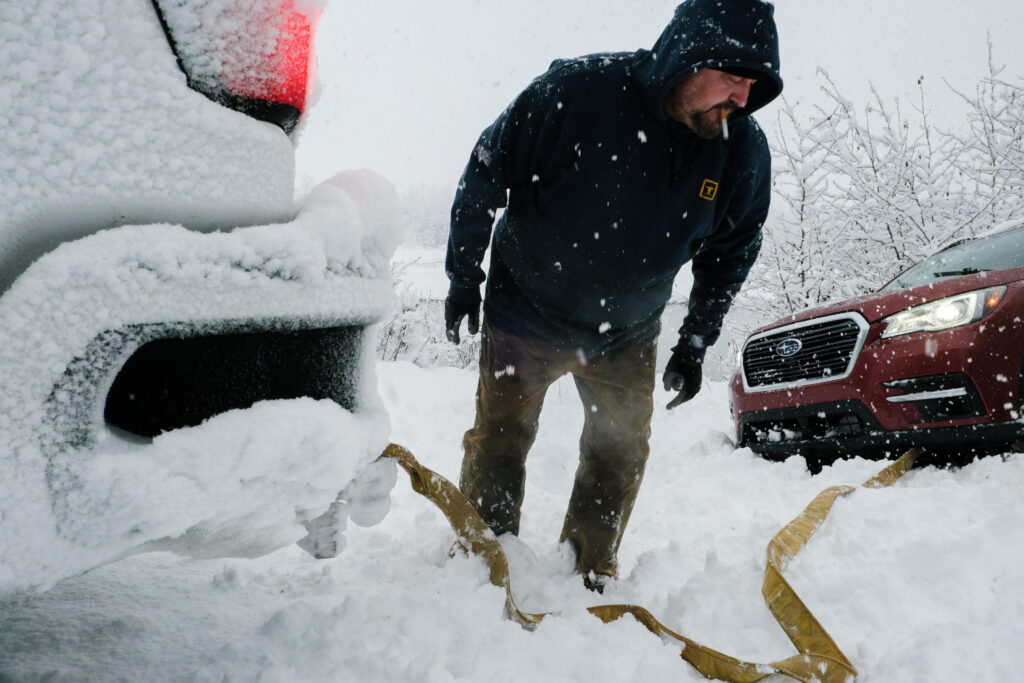
Ticket sales weren’t the only concern on the weekend, either. Sunday brought the season’s first snow storm, dropping over 10 inches of snow in town, and what looked to be over a foot of accumulation at the eagle preserve by midday. The road conditions meant fewer eagle photographers and bird watchers made it out to the preserve. Barbara Nettleton’s Takshanuk Mountain Trail shuttle, which was contracted to provide transportation to a group of festival attendees, did not drive out the road Sunday due to safety concerns.
For the few who made the drive, the conditions made photographing and bird-spotting difficult.
“Can’t photograph anything in this gup,” said local photographer Tim DePuydt, gesturing out to the blank-white view where the river was. He put away his camera soon after he started shooting.
Another photographer, Subburam Govindaraj of Santa Clara, California, was driving southbound through the preserve when he spotted an eagle perched on a roadside tree and turned off the road to photograph the bird. The roadside where he parked, however, was a wet gravel slope down to the river, with snow up to the car’s bumper. Govindaraj spun his tires to no avail and was stranded until a passing driver was able to pull him back onto the roadway.
Despite the foul weather and early concern about festival attendance, Benner said the event turned out to be a success, even more so than recent iterations of the festival.
The foundation’s Saturday dinner sold out, with 54 total attendees. The dinner sold out last year, too, Benner said, but this year’s was more profitable. Instead of catering the food, a scout group from Juneau helped prepare and serve the potato bar.
Benner said her initial impression was that the foundation “at least made a little money” from the weekend.
“I told the board and staff that my goal this year was just not to lose money. It’s meant to be a fundraiser for us, but in past years we never did very well,” Benner said.
While turning a profit is a boost, Benner said, she also pointed to other benefits of the festival besides revenue, including celebrating late eagle foundation founder Dave Olerud and raising awareness about the Chilkat Valley as a habitat and potential travel destination.
The festival happens outside of the usual cruise-ship, fishing, and ski-tourism seasons. This year, it drew a mix of tourists harder to pin down into any one category.
One core group was committed wildlife photographers, accustomed to spending money on trips to remote destinations.
Michigan photographer Dwight Teter, for instance, said in the past year he had been to Patagonia to photograph pumas and Katmai National Park photographing brown bears. In the next six months he has trips planned to Manitoba and Svalbard specifically to photograph polar bears. Teter, who has come for the eagle festival for the past four years, plans to return again next year with a group of photographer friends.
“I love the isolation here,” Teter said. “You come here and you can just kind of do your own thing and not be disturbed by people being disrespectful to the animals.”
Nettleton, the shuttle operator, said she had passengers from Texas, Georgia, and Massachusetts. Only one of the shuttle riders was primarily a photographer, she said.
The festival also drew Yukon and in-state tourists like Colby Butler and Monica Vasquez, of Palmer. Butler and Vasquez said they had been excited about the possibility of a more educational vacation, with wildlife talks at the raptor center and a trip to the Jilkaat Kwaan Heritage Center on their itinerary.
Butler and Vasquez found out about the eagle festival by happenstance in an Alaska-themed crossword book Vasquez bought in an airport.
Outside of crosswords, there’s hope that this year might have brought some more exposure to the festival with the arrival of social media content creators. On Nettleton’s shuttle was travel-influencer couple Deborah and Tyler Raarup, who had their Captain’s Choice Motel stay covered by the borough tourism department in exchange for the publicity.
The Raarups have around 25,000 followers on Instagram, just a fraction of someone like Dani Lister, a Yukon-based content creator who the borough has contracted with in the past. Borough tourism specialist Kiara Hylton said that’s not necessarily a bad thing: according to Hylton, some research suggests smaller accounts may have a higher likelihood of motivating followers to travel to specific destinations, rather than just watching the content as entertainment.
Next year, even if the content creators don’t bring in more visitors, Benner hopes the return of an older tradition will.
In the past, the release of an eagle, or eagles, into the preserve during the festival was a big draw — and a big fundraiser, Benner said. Groups around the region rehabilitating injured eagles would send them to the festival to be released back into the wild. The foundation would have visitors bid on the opportunity to open the kennel itself.
While there was no eagle ready for release this year, Benner called it a “good chance” of having an eagle release return next year.
Otherwise, Benner said the festival will likely remain much the same, including the date. While some photographers suggested a later start date would mean more eagles overall, and more eagles concentrated in still unfrozen parts of the preserve, Benner pointed to Sunday’s snow as a counterpoint.
“For one thing,” Benner said, “if we wait longer the weather is just going to get worse.”


